Restaurant Technology Stack for Growing Restaurant Groups: Integration Discipline Before the Next Opening
Blueprint the restaurant technology stack for growing restaurant groups: POS, labor, inventory, reservations, finance, operations systems, and integration patterns that prevent stack sprawl from stealing management attention.
In a Nutshell
- Growth exposes every shortcut—design the stack before improvisation becomes expensive technical debt.
- Anchor on POS, payroll, and accounting; other tools should plug in with clear data ownership.
- Fewer systems doing distinct jobs beats sprawl that steals management attention and breaks integrations.
- Define metrics and fields once (“what is a location?”) so reports reconcile across finance and ops.
- Before the next opening, pressure-test onboarding: roles, templates, and how a new unit joins the stack.
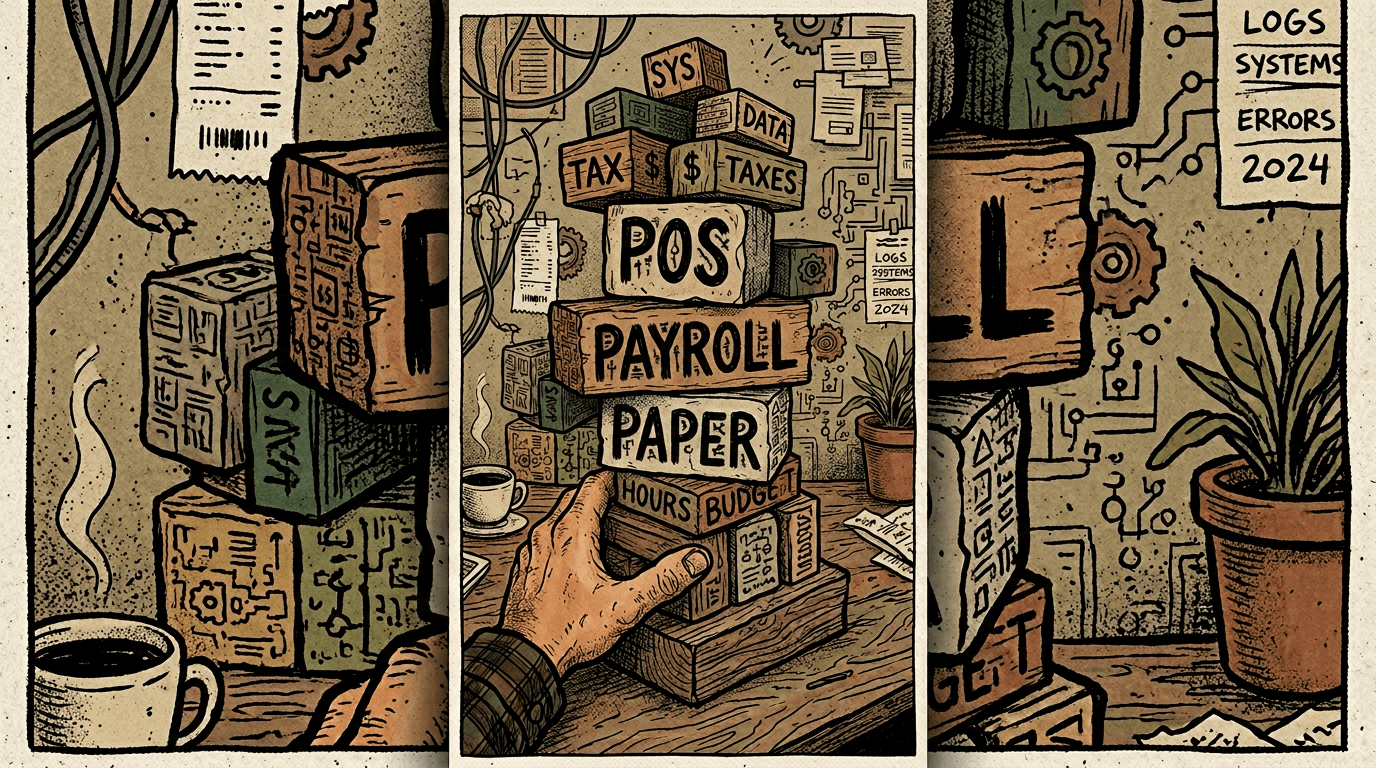
Growth turns small improvisations into expensive infrastructure. What worked with two stores—export spreadsheets, ad hoc vendor lists, and hero managers remembering everything—collapses at eight unless you architect deliberately. The restaurant technology stack for growing restaurant groups should aim for clarity: fewer systems doing distinct jobs well, integrated where data must cross, with owners who understand definitions end-to-end.
Related on UnitPass: Compare Restaurant Ops Software for Multi-Site Operators: Matrix Scoring That Survives a Real Saturday
Anchor systems: POS, payroll, accounting
Most groups anchor on POS for sales truth, payroll for people costs, and accounting for financial truth. These three do not need to be one vendor, but they need trustworthy connections and shared item catalogs where relevant. Disagreements between POS numbers and accounting often trace to mapping errors, refunds handling, gift cards, discounts, and comp policies—not malice. Fix mappings early; do not let them rot across openings.
Choose POS ecosystems that match your service model—full service, QSR, hybrid—and your growth plan. Migration later is painful; indecision now is also painful, but at least you can chart requirements with evidence from your own stores.
Labor, scheduling, and HR systems
Scheduling ties directly to compliance and morale. HR systems track onboarding, certifications, and employee records. The stack should minimize duplicate employee profiles across platforms—without exposing sensitive data to the wrong roles. Growing groups benefit from integration between HR and scheduling for compliance prompts: minor rules, break tracking, and training expirations.
Be cautious with novelty features nobody will administer. A stack that is theoretically powerful but practically neglected becomes technical debt quickly.
Inventory, recipes, and theoretical usage
Depending on your complexity, inventory systems may connect to ordering and recipe management. For growing groups, prioritize consistent SKU naming and units across stores before chasing advanced theory. Clean foundations beat sophisticated models on dirty data.
Decide whether inventory lives as one system or separate tools by concept—franchise complexity may push you toward templates per brand.
Reservations, guest data, and CRM responsibly
Guest relationship tools can improve revenue when used ethically and legally. Ensure privacy practices align with regulations and guest expectations. Integrate reservations with table management thoughtfully—avoid double-booking nightmares that embarrass the brand.
For multi-location groups, align guest profiles carefully; guests may dine across stores and expect coherent recognition without creepy overreach.
Operational work management: the layer many stacks forget
Sales systems do not fix walk-in coolers. A growing group needs a layer for cross-store operations: maintenance, vendor memory, facilities context, marketing execution readiness, and internal tasks. This is where many brands stitch together chat threads until something expensive breaks. The restaurant technology stack for growing restaurant groups should include durable operations memory—not only financial memory.
Choose platforms that meet managers on mobile and connect to communication tools teams already use, without letting chat become your database.
Integration patterns: APIs, middleware, and pragmatic exports
Evaluate integration approaches realistically. Native integrations are ideal when stable. Middleware can help when many tools must talk. Scheduled CSV exports are acceptable if monitored—brittle if forgotten. Document ownership: who checks integration health weekly, who resolves mapping breaks, and who approves vendor changes.
Avoid building custom glue unless it is truly differentiated; maintenance burden grows with store count.
Security, access control, and vendor risk
As you grow, enforce MFA, least privilege roles, and offboarding discipline. Review third-party vendor security postures for systems holding employee and guest data. Breaches are not only technical—they are brand crises.
Centralize a lightweight stack inventory: system owners, renewal dates, integration maps, and escalation contacts. This becomes invaluable during leadership transitions.
Roadmap discipline: fewer tools, clearer outcomes
Growing groups often stack tools reactively: one tool for a problem last quarter, another for a problem this quarter, until nobody knows the whole picture. Periodically prune, consolidate, and align to outcomes: guest satisfaction, margin stability, compliance, and team sanity. The best restaurant technology stack is the one your operators can actually live with while still wowing guests night after night.
Telephony, reservations noise, and guest communication channels
Phones still matter—even as digital channels grow. Route calls intelligently, align hours everywhere, and ensure hosts can trust systems that show accurate availability. A restaurant technology stack for growing restaurant groups should reduce guest friction across voice, web, and walk-in realities. Nothing erodes trust faster than contradictory answers depending on who picks up.
As you grow, standardize guest communication policies: confirmation messages, waitlist expectations, allergy handling steps, and escalation paths for complaints. Consistency here is brand protection as much as marketing.
Analytics that tie actions to operations—not only marketing vanity
Web analytics, ad spend, and social metrics are useful when linked to store execution. If marketing drives traffic but ops cannot handle throughput, campaigns backfire. Connect planning rhythms so campaigns are only turned up when readiness metrics justify it—training done, staffing planned, inventory staged.
Your stack should answer cross-functional questions: not only “how many clicks,” but “did the guest leave satisfied at the store we promised would be ready?” That is operational marketing alignment—the competitive edge for disciplined groups.
Succession planning for the stack itself
Document who owns each integration mentally—not only technically. When leaders rotate, silent knowledge loss breaks stacks quietly. The restaurant technology stack for growing restaurant groups needs a living map: contracts, renewals, escalation contacts, and known failure patterns. Treat the stack like facilities: maintain it intentionally.
When you do, growth becomes less fragile. Your teams spend less time fighting tools and more time serving food people crave in environments that feel thoughtfully run.
If you are assembling your restaurant technology stack for growing restaurant groups in 2026, bias toward interoperability, clear ownership, and operational usefulness on mobile. The winning stack is rarely the one with the most logos—it is the one your leaders can explain without shame, your teams can use without cursing, and your guests can feel in the consistency of the experience from the first greeting to the last thank-you.
Write it down, own it, and revisit it quarterly: your stack is a living asset.
- Anchor POS ↔ payroll ↔ accounting mappings early; reconcile definitions often.
- Add operational memory—not only financial systems—as you scale store count.
- Prefer stable integrations; document owners, monitoring, and failure modes.
- Prune stack sprawl quarterly; tie purchases to measurable outcomes.
Sources & further reading
Authoritative references for context (not endorsements of any vendor):